How to Trade Perpetuals on Hyperliquid: A Complete Beginner’s Guide (2026)
Perpetual futures have become the dominant trading instrument in crypto, and Hyperliquid has emerged as the leading fully on-chain venue for trading them — combining centralized-exchange speed with the transparency and self-custody of DeFi. If you’re used to trading perps on a centralized exchange and want to understand how Hyperliquid works, or you’re new to perpetuals altogether, this guide walks through everything from account setup to placing your first leveraged position.
What Is Hyperliquid?
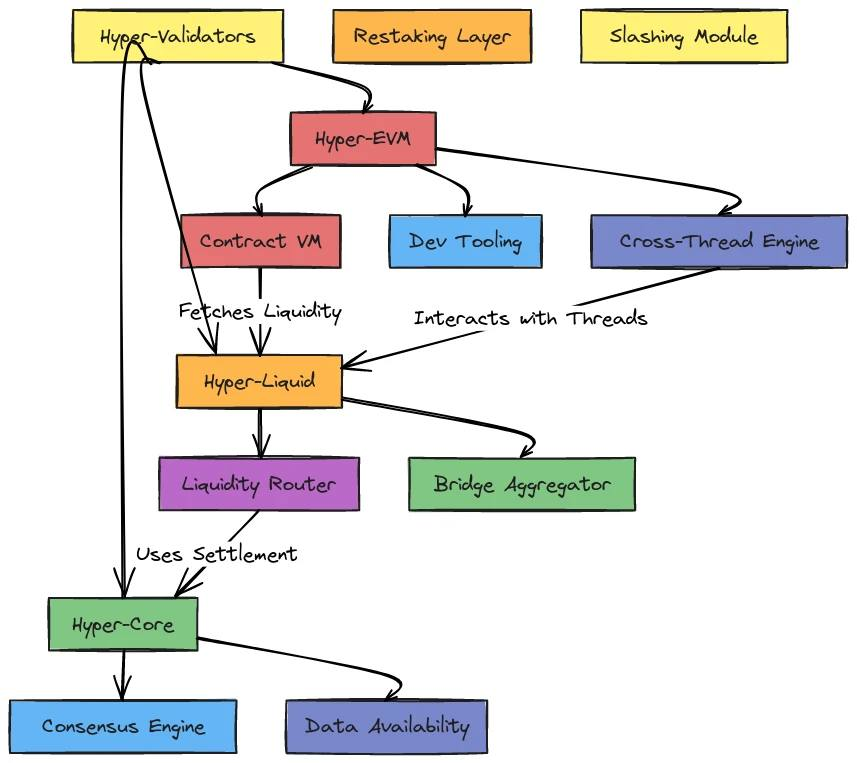
Hyperliquid is a decentralized perpetual futures exchange built on its own purpose-built Layer 1 blockchain, HyperCore, designed specifically to support an order-book-based trading experience on-chain. Unlike most DeFi perpetuals platforms that rely on automated market makers or synthetic pricing models, Hyperliquid runs a fully on-chain central limit order book (CLOB) — meaning trades execute with the same order types, depth, and price discovery you’d expect from a centralized exchange, but with your funds never leaving your control.
This matters for a simple reason: in traditional CEX perpetuals trading, your collateral sits in the exchange’s custody. On Hyperliquid, your funds remain in your own wallet, connected directly to the protocol, which removes a major category of counterparty risk that’s caused significant losses across the industry.
What Are Perpetual Futures, Exactly?
Perpetual futures (“perps”) are derivative contracts that let you speculate on an asset’s price without an expiration date — unlike traditional futures, which settle on a fixed date. Perps track the underlying spot price through a mechanism called the funding rate, a periodic payment exchanged between long and short position holders that keeps the perpetual contract’s price anchored to spot.
- When perps trade above spot price, longs pay shorts (funding is positive).
- When perps trade below spot price, shorts pay longs (funding is negative).
Funding rates matter more than most beginners realize. Holding a leveraged position for an extended period during a high positive funding environment can meaningfully erode returns even if your directional thesis is correct.
How to Sign Up for Hyperliquid: Step-by-Step Guide
Getting started on Hyperliquid is more straightforward than most DeFi protocols because the interface closely mirrors a centralized exchange, despite being entirely on-chain. Here’s exactly how to go from zero to a funded trading account.
Step 1: Get an EVM-compatible wallet. If you don’t already have one, install MetaMask or Rabby (both work well with Hyperliquid). This wallet — not an email/password combo — is your account.
Step 2: Sign up via referral link. Visit app.hyperliquid.xyz/join/ARCHITECTRADE to create your account with a fee discount applied automatically. There’s no cost to using a referral link, and no KYC or identity verification required at any point.
Step 3: Connect your wallet. Click “Connect” on the Hyperliquid interface and approve the connection from MetaMask/Rabby. This links your wallet to the platform without giving Hyperliquid custody of your funds.
Step 4: Get USDC on Arbitrum. You’ll need USDC on the Arbitrum network to fund your account. If your USDC is on another chain or on a centralized exchange, withdraw directly to Arbitrum, or bridge from another network using a service like the native Arbitrum bridge.
Step 5: Deposit into Hyperliquid. From the Hyperliquid interface, deposit your Arbitrum USDC — it bridges directly into your HyperCore trading account, typically settling within minutes.
Step 6: Verify your balance and start trading. Once your deposit confirms, your USDC is available as margin. From here you can select a market, choose your leverage, and place your first order.
Security tip: Since there’s no password recovery or customer support line for a self-custodial wallet, make sure your wallet’s seed phrase is backed up securely before you deposit any funds — not after.
Placing Your First Trade
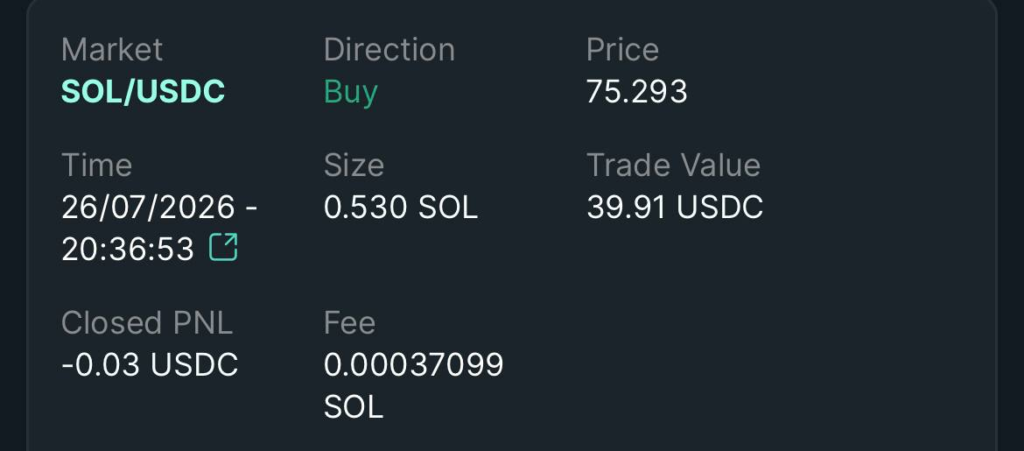
Once funded, the trading interface will look familiar if you’ve used any major CEX perps platform: an order book, a chart, position size inputs, and leverage selection.
1. Choose your market. Hyperliquid lists a wide range of perpetual markets, from major assets like BTC and ETH to a long tail of altcoin perps, often before they’re available on centralized platforms.
2. Select your leverage. Hyperliquid allows leverage up to 50x on major markets, though available leverage varies by asset and by the platform’s risk parameters for that market. Higher leverage doesn’t just amplify gains — it proportionally amplifies your liquidation risk, so this is the single most important decision in the entire process.
3. Choose order type. You can place market orders for immediate execution or limit orders to enter at a specific price. Hyperliquid also supports stop-loss and take-profit orders natively, which is a meaningful advantage over many DeFi perps platforms that lack native conditional order support.
4. Set your position size and confirm. Your margin requirement, liquidation price, and estimated fees are all displayed before you confirm — always review the liquidation price specifically, not just the entry price.
Understanding Liquidation and Risk Management
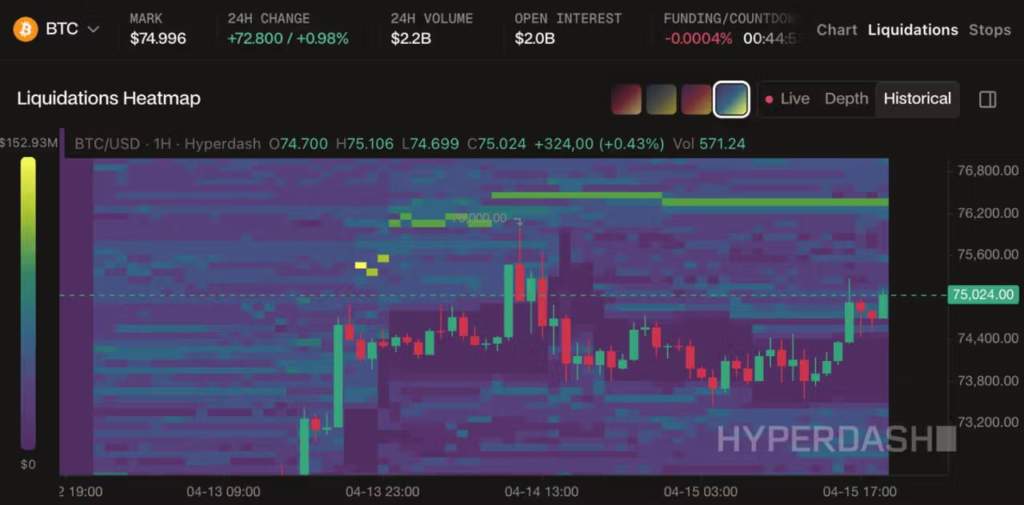
the image above is taken from Hyperdashs’ official site.
This is the section most beginner guides underweight, and it’s the one that actually determines whether you survive long enough to become a profitable trader.
Liquidation price is the price at which your position is automatically closed because your margin can no longer cover potential losses. The higher your leverage, the closer your liquidation price sits to your entry — a 20x position can be liquidated by a relatively small adverse price move.
A few practical risk management principles specific to perpetuals trading:
- Use isolated margin when testing new strategies or assets. Isolated margin confines potential losses to the specific position rather than exposing your entire account balance.
- Don’t max out available leverage just because it’s offered. The maximum leverage a platform allows is a technical ceiling, not a recommendation.
- Account for funding rates in your holding period. A position held for weeks under sustained negative funding (if you’re long) accrues a real, ongoing cost independent of price action.
- Set stop-losses at entry, not after the position moves against you. Deciding your risk tolerance in the moment of a loss is a well-documented way to make worse decisions than deciding it in advance.
Why Traders Are Moving to Hyperliquid Specifically
A few structural factors explain Hyperliquid’s rapid growth relative to other perpetuals platforms:
- On-chain order book, not an AMM. This produces tighter spreads and more realistic price discovery than pool-based perpetual DEXs, particularly for larger positions.
- CEX-level speed with self-custody. HyperCore is built to handle order-book throughput on-chain, avoiding the latency issues that plagued earlier attempts at fully decentralized perps trading.
- No KYC requirement. Traders retain access without submitting identity documentation, which appeals both to privacy-conscious users and to traders in regions with limited centralized exchange access.
- Deep, growing altcoin perp listings. Hyperliquid has become a venue where newer perpetual markets list earlier than on many centralized platforms.
Final Thoughts
Hyperliquid represents one of the more credible attempts to bring the full CEX perpetuals experience on-chain without sacrificing execution quality. For traders coming from centralized platforms, the learning curve is shallow — the core mechanics of leverage, funding rates, and liquidation risk work the same way. What changes is custody: your capital stays in your control throughout.
If you’re setting up an account, using a referral link costs nothing extra and typically comes with a fee discount: app.hyperliquid.xyz/join/ARCHITECTRADE.
This article is for informational purposes only and does not constitute financial advice. Perpetual futures trading carries significant risk, including the potential loss of your entire position. Always do your own research (DYOR) before trading.